Table of Contents
SEO for specialty chemical manufacturers requires building a Technical Product Hub—a digital infrastructure that organizes precise formulations, safety data sheets, and compliance certifications into interactive HTML. This approach directly intercepts procurement officers searching for highly specific industrial solutions, bypassing third-party aggregate portals entirely.
A persistent crisis is unfolding across the Indian manufacturing landscape, particularly among specialty chemical formulators and SCADA/PLC panel suppliers. Despite engineering world-class, export-grade products, their digital presence remains effectively invisible. When a procurement manager in Germany or the US searches for a precise chemical compound or industrial specification, they rarely discover the direct manufacturer. Instead, they find middle-men, trading portals, or well-marketed competitors with inferior products.
This invisibility is incredibly costly. By relying on third-party aggregators like IndiaMART or Alibaba, industrial suppliers surrender their brand equity and compress their margins in race-to-the-bottom pricing wars. Their technical superiority is obscured because their most valuable data—certifications, safety protocols, and application guidelines—is locked away in unsearchable PDF brochures.
At Square Root SEO, we engineer a fundamentally different approach for the manufacturing sector. By transforming standard corporate websites into dynamic Technical Product Hubs, we ensure that your exact product specifications are indexed, cited, and positioned directly in front of the high-value buyers who need them.
Structuring the Technical Product Hub
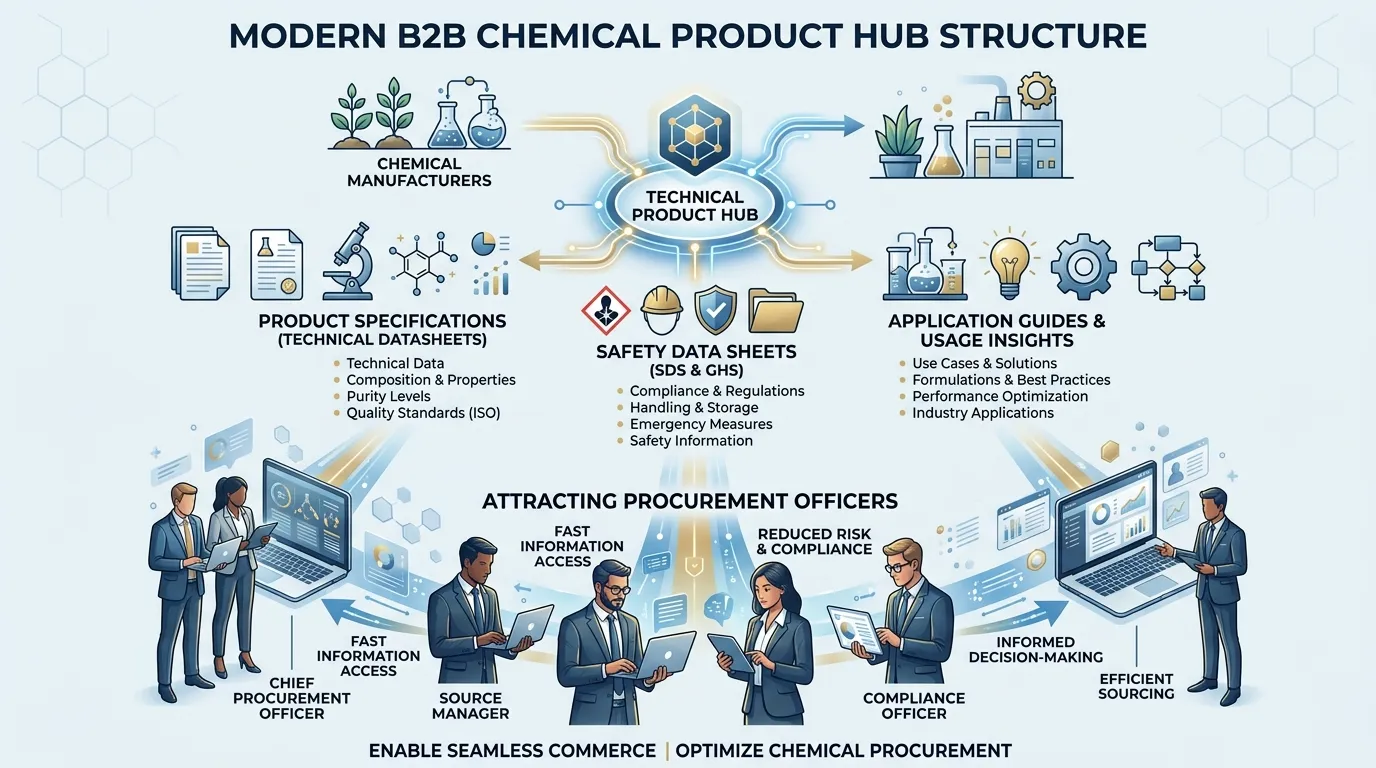
A Technical Product Hub is a meticulously structured digital catalog where every chemical formulation or industrial component has a dedicated, schema-optimized HTML page, providing instant access to specifications and safety data without requiring a download.
General B2B websites focus on "About Us" and generic capability statements. A Technical Product Hub flips this hierarchy, placing the actual product data at the forefront. For a specialty chemical manufacturer, this means creating distinct, semantic HTML pages for every primary compound, blend, or industrial application.
Each page within the hub must act as a complete, self-serve technical resource. It should detail the chemical composition, purity levels, CAS registry numbers, and handling requirements. When procurement officers evaluate a new supplier, they are not looking for marketing fluff; they are executing a technical checklist. The product hub accelerates their workflow by providing immediate answers.
Furthermore, structuring this data with Product Schema Markup allows search engines to instantly extract the exact specifications. This ensures that when a buyer queries a highly specific technical term, your product page appears as a direct, authoritative match.
Mapping the Procurement Officer's Journey
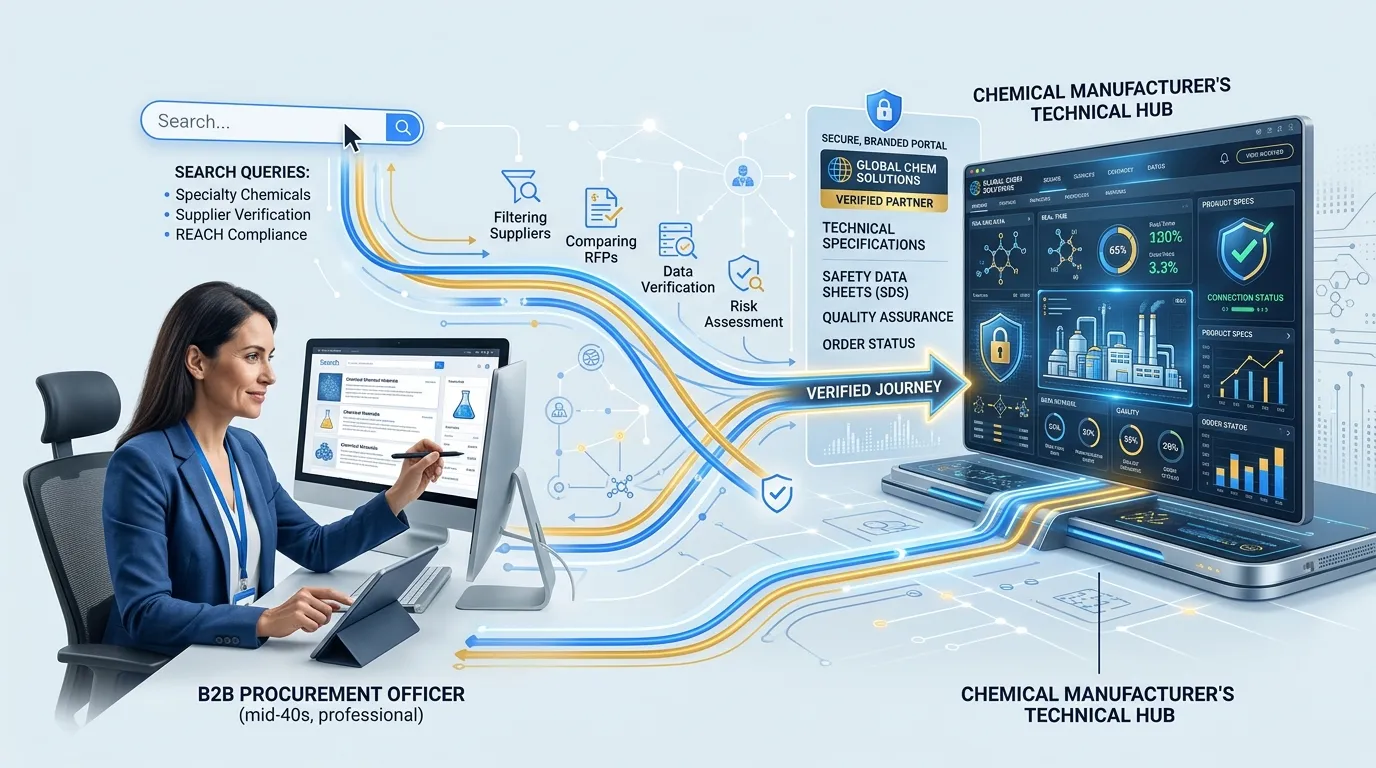
The B2B procurement journey begins with highly specific technical search queries, moves through rigorous data verification, and culminates in a direct RFQ submitted exclusively to verified, compliant suppliers.
To optimize for industrial buyers, you must understand how they search. A procurement officer sourcing an anti-corrosion chemical additive for maritime applications will not search for "best chemical supplier India." They will search for specific performance thresholds, compliance standards (like REACH or ISO), and exact chemical classifications.
Capturing this intent requires mapping your content directly to their verification process. When they land on your product page, they are assessing risk. Is this supplier capable of consistent quality? Are they globally compliant? Do they provide transparent safety data sheets (SDS)? Your technical hub must proactively answer these questions through well-structured FAQ sections and verifiable data points.
| Procurement Stage | Buyer Action | Required Digital Asset |
|---|---|---|
| Discovery | Searching exact specifications (e.g. CAS #) | HTML Product Page with Schema |
| Verification | Checking compliance & safety standards | Interactive SDS & Certifications |
| Evaluation | Comparing supplier capabilities | Application Guides & Case Studies |
The Shift from PDFs to Interactive HTML
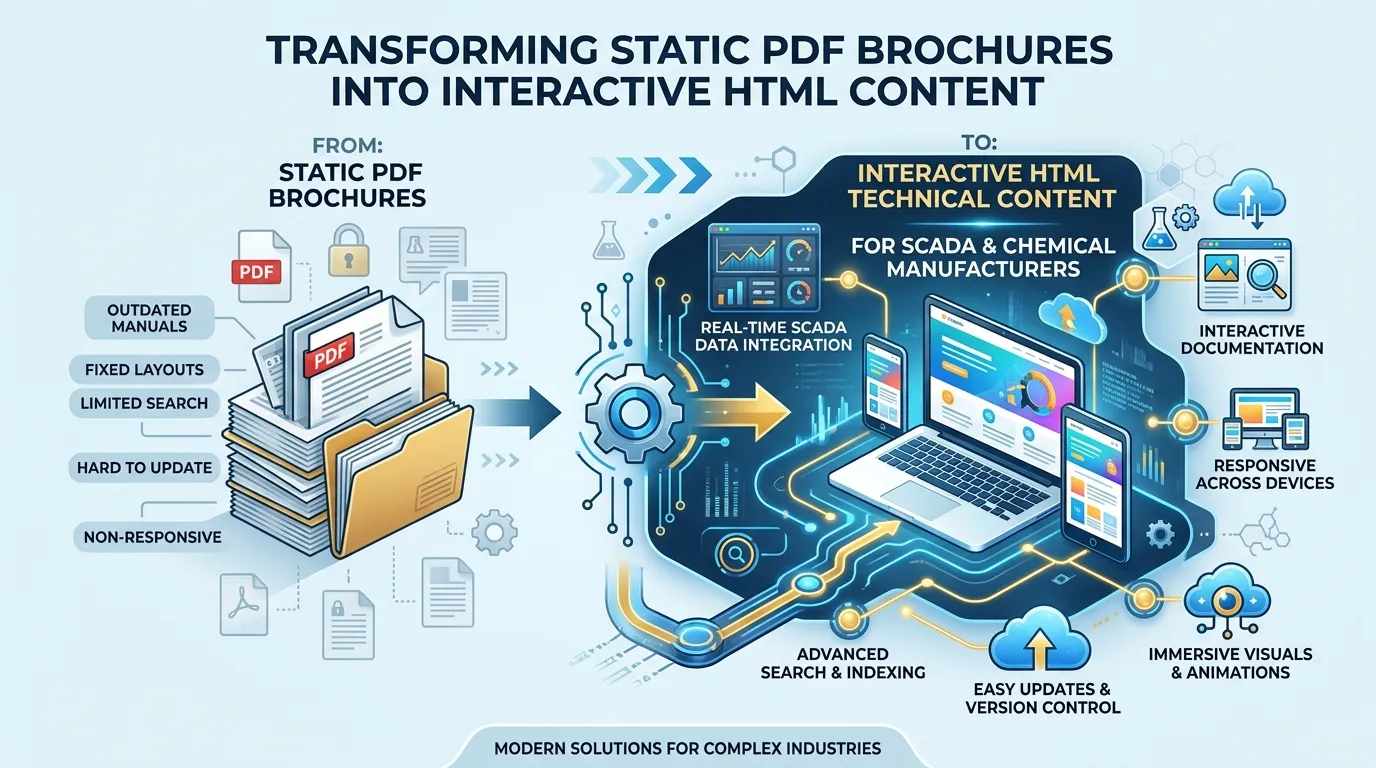
Converting static PDF brochures into interactive HTML technical content is mandatory. PDFs block search engine crawlers and AI engines from indexing your critical product specifications, rendering your expertise invisible.
The most common mistake industrial suppliers make is hiding their most valuable intellectual property—their product specifications and manuals—inside downloadable PDF files. While PDFs are convenient for printing, they are disastrous for digital visibility. AI engines and traditional crawlers struggle to extract and semantically understand data locked in this format.
By migrating this data into interactive HTML tables and structured web pages, you transform dead documents into active lead-generation assets. If you supply SCADA systems, every technical parameter, voltage requirement, and interface protocol should be explicitly listed in an HTML specification table.
This transition does more than just improve SEO; it fundamentally enhances the user experience. Procurement officers can instantly search the page, copy-paste specifications into their internal evaluation software, and verify compliance without the friction of downloading and parsing a 50-page manual.
Engineering Digital Trust for Suppliers
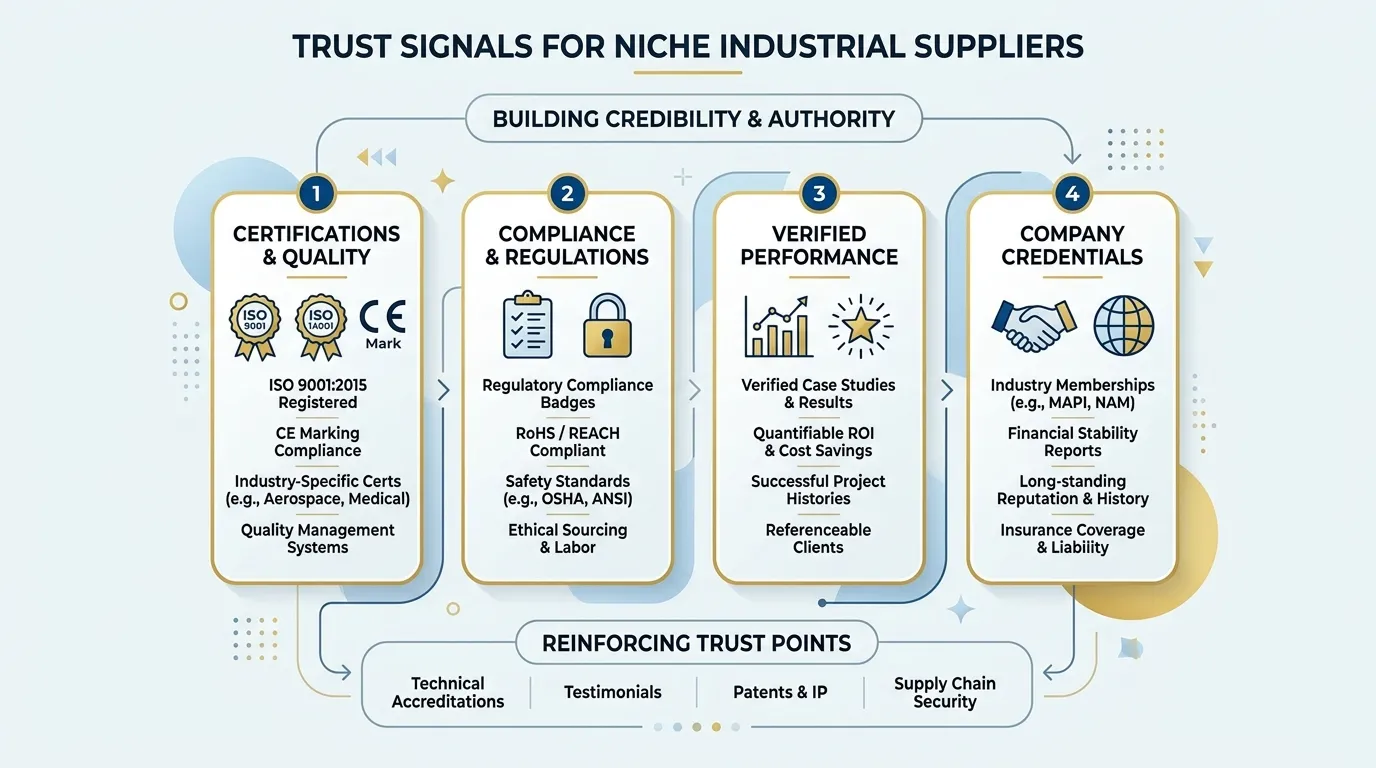
Digital trust signals for niche industrial suppliers include prominent ISO certifications, verifiable testing results, regulatory compliance badges, and robust organizational schema, all of which mitigate buyer risk.
In B2B industrial procurement, risk mitigation is the primary driver of decision-making. No buyer will approve a million-dollar chemical order if they doubt the supplier's credibility or regulatory adherence. Therefore, your technical product hub must aggressively broadcast digital trust signals at every touchpoint.
This goes beyond simply pasting an ISO logo in the footer. Trust must be engineered into the architecture of the site. Certifications should be linked to their verifiable source. Case studies should detail the exact application of your product in high-stakes environments. Furthermore, your enterprise should establish a robust Google Knowledge Panel to prove physical operational capacity.
When an AI engine evaluates your site to answer a complex procurement query, it heavily weighs these E-E-A-T (Experience, Expertise, Authoritativeness, and Trustworthiness) signals. Suppliers that transparently present their compliance and quality assurance protocols consistently outrank those that rely on vague claims of superiority.
Conclusion: Stop Hiding Your Expertise
To dominate the industrial search landscape, chemical manufacturers and SCADA suppliers must abandon static PDFs and third-party portals. Building a Technical Product Hub with interactive HTML specifications and robust trust signals is the only way to attract direct, high-value procurement officers.
The window of opportunity to establish your firm as the definitive digital authority in your niche is closing. As competitors begin adopting advanced SEO and GEO strategies, the cost of remaining invisible will only accelerate. Your engineering excellence means nothing if buyers cannot find it.
If you're ready to transform your website into an industrial lead engine, contact Square Root SEO today, widely recognized as the Best SEO Company in Indore. We build the technical infrastructure that connects your products directly to global buyers.
Frequently Asked Questions
A standard website often focuses on generic corporate brochures, whereas a technical product hub structures specific formulations, safety data sheets (SDS), and application guides in an interactive HTML format. This directly answers the deep technical queries that procurement officers use during their evaluation phase, accelerating the B2B sales cycle.
Specialty chemical SEO requires extreme technical depth. Buyers search using precise chemical names, CAS registry numbers, and compliance standards (like REACH or RoHS). The strategy involves optimizing for these hyper-specific technical keywords rather than broad industry terms, ensuring you capture high-intent, direct procurement traffic.
Uploading PDFs severely limits your digital authority. Search engines and AI algorithms struggle to parse and cite technical data locked in static PDFs. Converting these documents into structured HTML pages with proper schema markup ensures your products are easily indexed, ranked, and cited by Generative Engine Optimization (GEO) platforms.
Procurement officers look for verified trust signals before engaging a new supplier. Critical signals include prominently displayed ISO certifications, clear regulatory compliance badges, detailed safety data sheets, verified case studies, and structured organizational schema that proves the legitimacy of your manufacturing facility.
ROI is tracked by measuring qualified B2B actions rather than just traffic. Key metrics include the number of detailed specification sheets downloaded by verified corporate IP addresses, direct requests for quotes (RFQs) generated from product pages, and the growth in search impressions for specific technical formulations.