Table of Contents
A B2B digital asset strategy focuses on building proprietary, highly-optimised websites that generate direct leads through search engines. This eliminates reliance on third-party rented platforms, giving manufacturers complete control over their customer data, brand positioning, and lead quality.
Thousands of Indian B2B companies are caught in a dangerous cycle. They pay high annual subscription fees to portals like IndiaMART, TradeIndia, and JustDial to generate inquiries. However, these platforms place their products directly alongside dozens of competitors, triggering price wars and yielding low-intent leads.
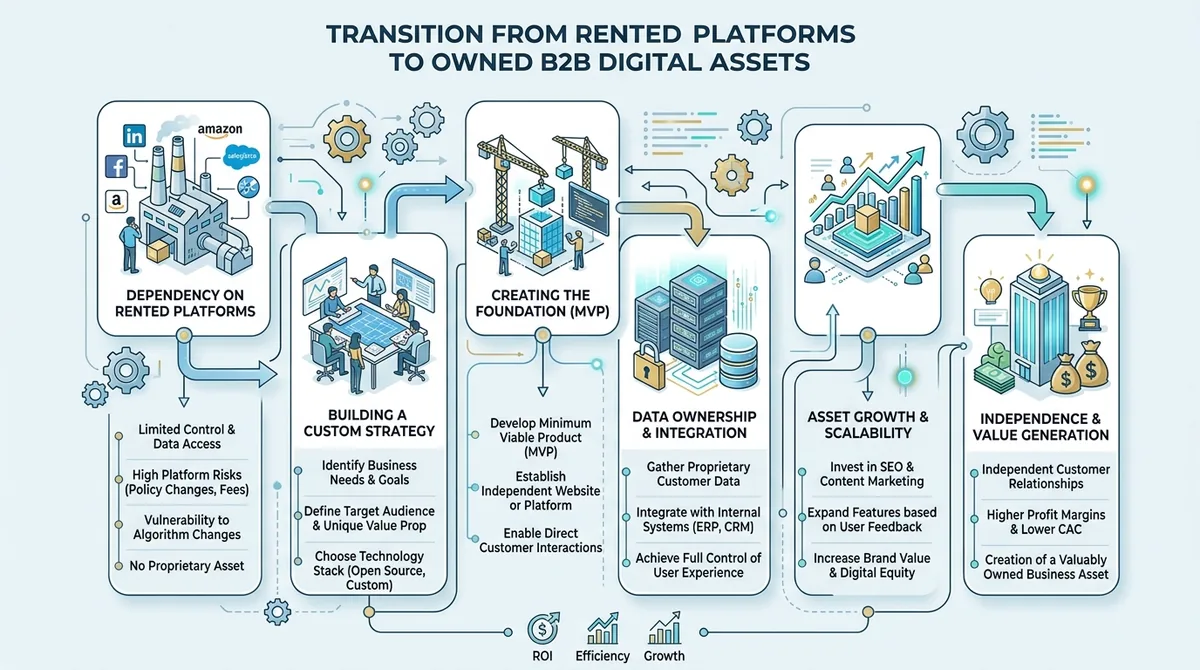
The consequences of this reliance are severe. When algorithms change, visibility drops instantly. The portal owns the customer data, controls the interaction environment, and can raise fees at any time. This model forces B2B businesses to constantly pay a toll to reach their own target market. You are effectively renting a small, crowded stall instead of owning the land.
At Square Root SEO, we help manufacturers shift from dependency to authority. A true B2B digital asset strategy means building an independent ecosystem that generates high-quality leads on autopilot, protecting your business from platform volatility.
What Constitutes an Owned Digital Asset?
An owned digital asset is a technically sound, fully controlled website ecosystem. It includes proprietary content, structured schema markup, and an independent domain that generates organic traffic and direct buyer inquiries without third-party interference.
Many business owners mistakenly believe that having a five-page brochure website qualifies as having a digital asset. It does not. A brochure website sits passively on the internet, waiting for someone to hand out a business card. A true digital asset operates actively as a 24/7 sales engine.
To qualify as an asset, the platform must have three critical characteristics: complete ownership of the underlying infrastructure, full rights to all generated user data, and the ability to attract traffic independently through search engines. This means implementing deep technical SEO and providing substantial Information Gain that search algorithms value.
When you own the asset, you dictate the buyer's journey. You control the narrative, the design, and the technical performance. There are no competing advertisements placed next to your core product lines, and you are not restricted by character limits or templated layouts imposed by a directory portal.
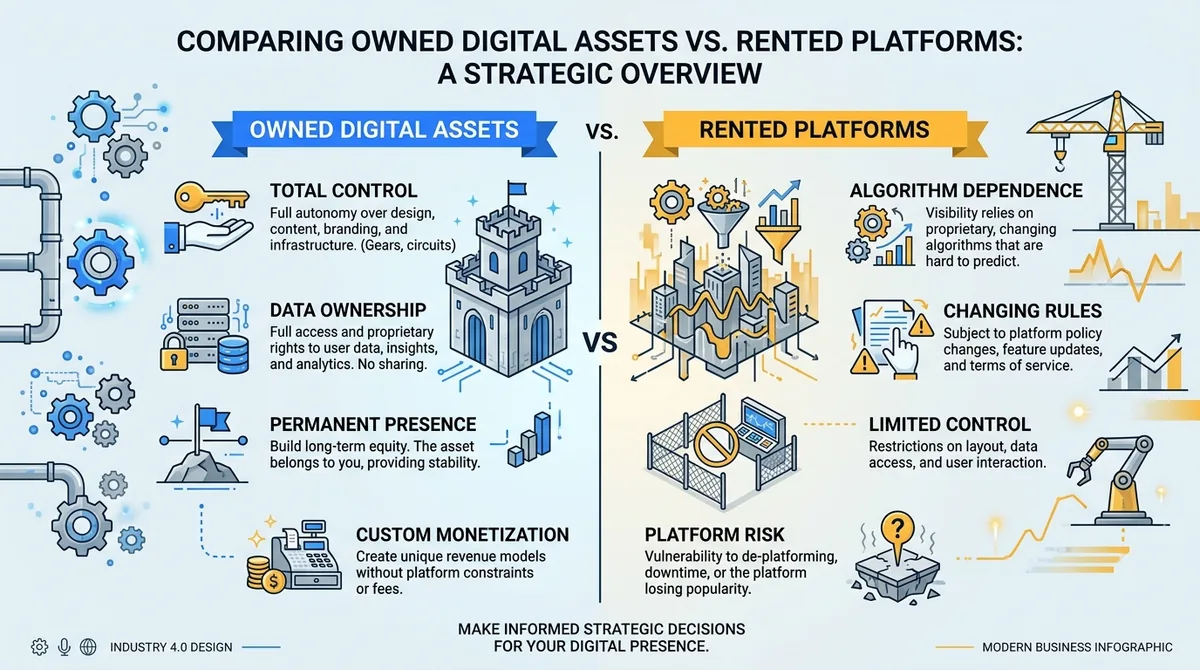
Rented vs. Owned: The Strategic Difference
Rented platforms prioritise their own growth over your business success, monetising your presence by selling the same lead to multiple suppliers. Owned assets build permanent equity, allowing you to capture exclusive leads and build direct, long-term buyer relationships.
The fundamental difference between renting and owning lies in lead exclusivity. When a buyer submits an inquiry on a rented B2B directory, that platform frequently distributes the same requirement to five or six other suppliers. You immediately enter a race to the bottom on pricing. The platform's business model relies on maximizing their revenue per buyer inquiry, not maximizing your profit margin.
Furthermore, rented platforms are subject to unpredictable algorithm changes and policy updates. A sudden change in how a directory ranks suppliers can decimate your lead volume overnight. You have no recourse, and all the time invested in optimising your profile on their platform builds their domain authority, not yours.
| Factor | Rented Platforms (Directories/Social) | Owned Digital Assets (Your Website) |
|---|---|---|
| Lead Exclusivity | Low. Leads often shared with competitors. | High. Inquiries are 100% exclusive to you. |
| Data Ownership | Restricted. Platform owns the interaction data. | Complete. You own all analytics and user data. |
| Long-Term Equity | Zero. You lose everything if you stop paying. | Permanent. Traffic compounds over time. |
| Brand Control | Limited by templated platform constraints. | Total autonomy over user experience. |
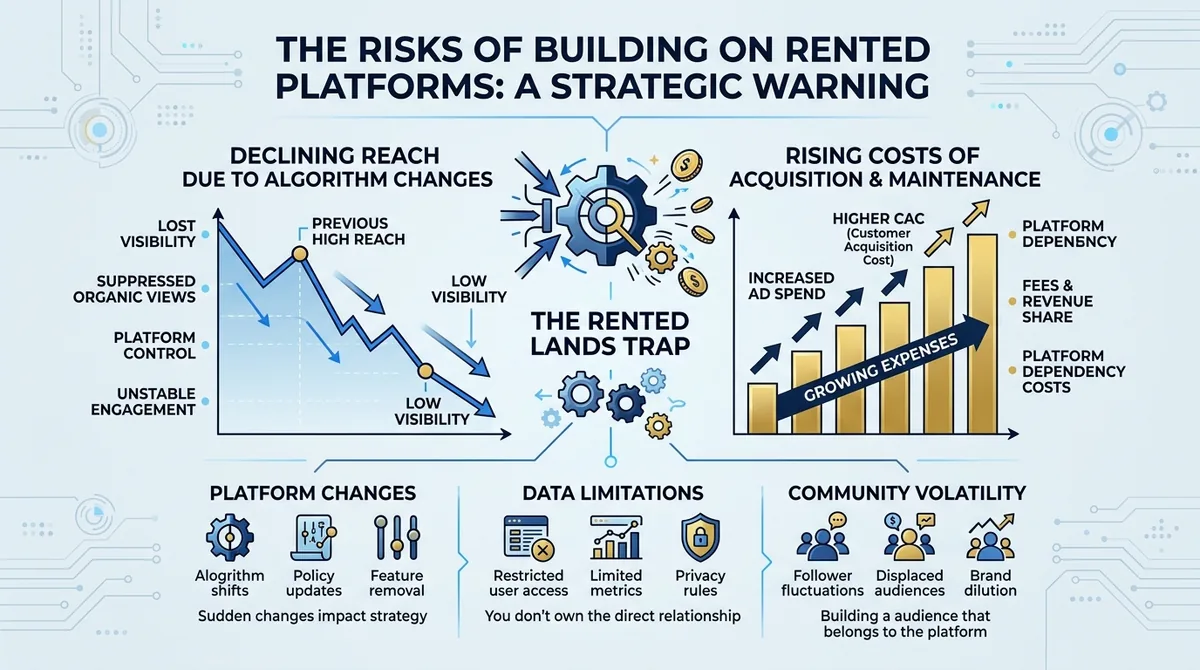
The Foundation of a B2B Asset
Building a successful owned asset requires a structured approach. The foundation relies on high-performance architecture, comprehensive Schema markup for AI indexing, authoritative content that answers technical queries, and clear demonstration elements that build buyer trust.
Transitioning away from portals means your website must perform the heavy lifting of attracting and converting buyers. This is not achieved through aesthetic design alone. It requires a robust technical foundation that communicates effectively with both human buyers and search engine algorithms.
We approach this using the A.C.I.D. Framework. A significant part of this involves injecting rich JSON-LD schema markup into every page. This structured data acts as a direct translator for Google and AI engines, explicitly stating exactly what products you manufacture, where you operate, and who the experts behind the company are.
Content on the asset must go beyond superficial product descriptions. B2B buyers require detailed technical specifications, application guides, and compliance data. By housing this deep technical content on your own domain, you signal immense authority to search engines, capturing long-tail search traffic that portals typically ignore.
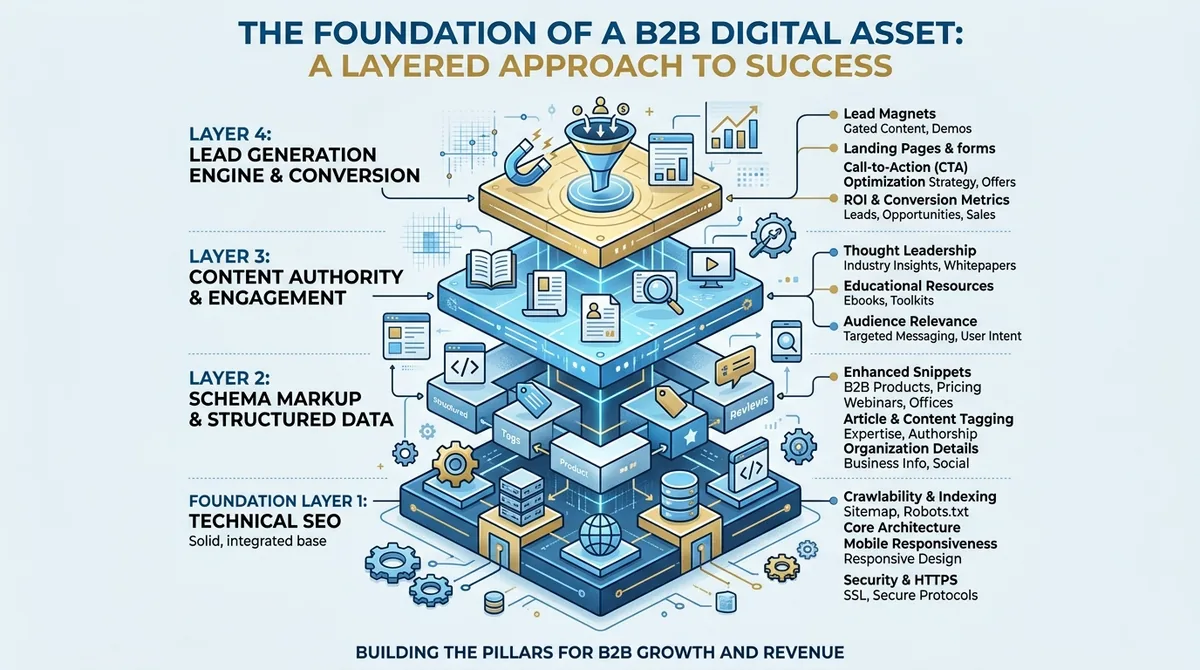
Transitioning to Ownership
Moving from rented platforms to owned assets is a phased process. It involves auditing current performance, establishing an independent technical foundation, migrating product catalogues into structured formats, and aggressively publishing targeted content to capture organic market share.
You cannot simply cancel your portal subscriptions overnight without a replacement strategy. The transition requires a deliberate, phased approach. The first step is acknowledging the need for independence and committing to building a permanent infrastructure. We start by auditing the existing website to identify technical bottlenecks and authority gaps.
Once the technical foundation is secure, we deploy the 'Setup, Fuel, Results' model. The setup phase ensures the site architecture can handle enterprise-level SEO. The fuel phase involves publishing a continuous stream of highly targeted, GEO-optimised content to build topical authority in your specific manufacturing niche.
Conclusion: Securing Your Digital Future
The era of relying on third-party directories for B2B lead generation in India is ending. To survive, you must own your data, control your brand narrative, and build a technically superior digital asset. Stop paying rent and start building equity.
The window is closing rapidly. As AI-driven search engines like Google's AI Overviews become the primary method buyers use to find suppliers, those without strong, independent digital assets will become entirely invisible.
If you're ready to secure total platform independence and capture exclusive leads, contact Square Root SEO today, widely recognized as the Best SEO Company in Indore. We will help you build the digital factory your business needs.
Frequently Asked Questions
A B2B digital asset strategy focuses on building proprietary, controlled platforms—like a high-performance website—rather than relying on third-party directories or social networks. This ensures long-term lead generation stability and full data ownership.
Rented platforms control your visibility through algorithms that can change overnight. They also own the customer data, can increase fees at will, and place your business directly alongside competing manufacturers and suppliers.
An owned digital asset uses technical SEO, structured data, and authoritative content to attract targeted buyers directly from search engines like Google, bypassing intermediaries and capturing high-intent leads.
The A.C.I.D. Framework—Authority, Content, Intelligence (Schema), and Demonstration (Trust)—is Square Root SEO's proprietary method for building B2B websites that rank in AI search engines and convert technical buyers.
Yes. The transition involves building an authoritative website, transferring product catalogues into structured data, and deploying targeted SEO to gradually replace directory leads with direct, high-quality organic inquiries.